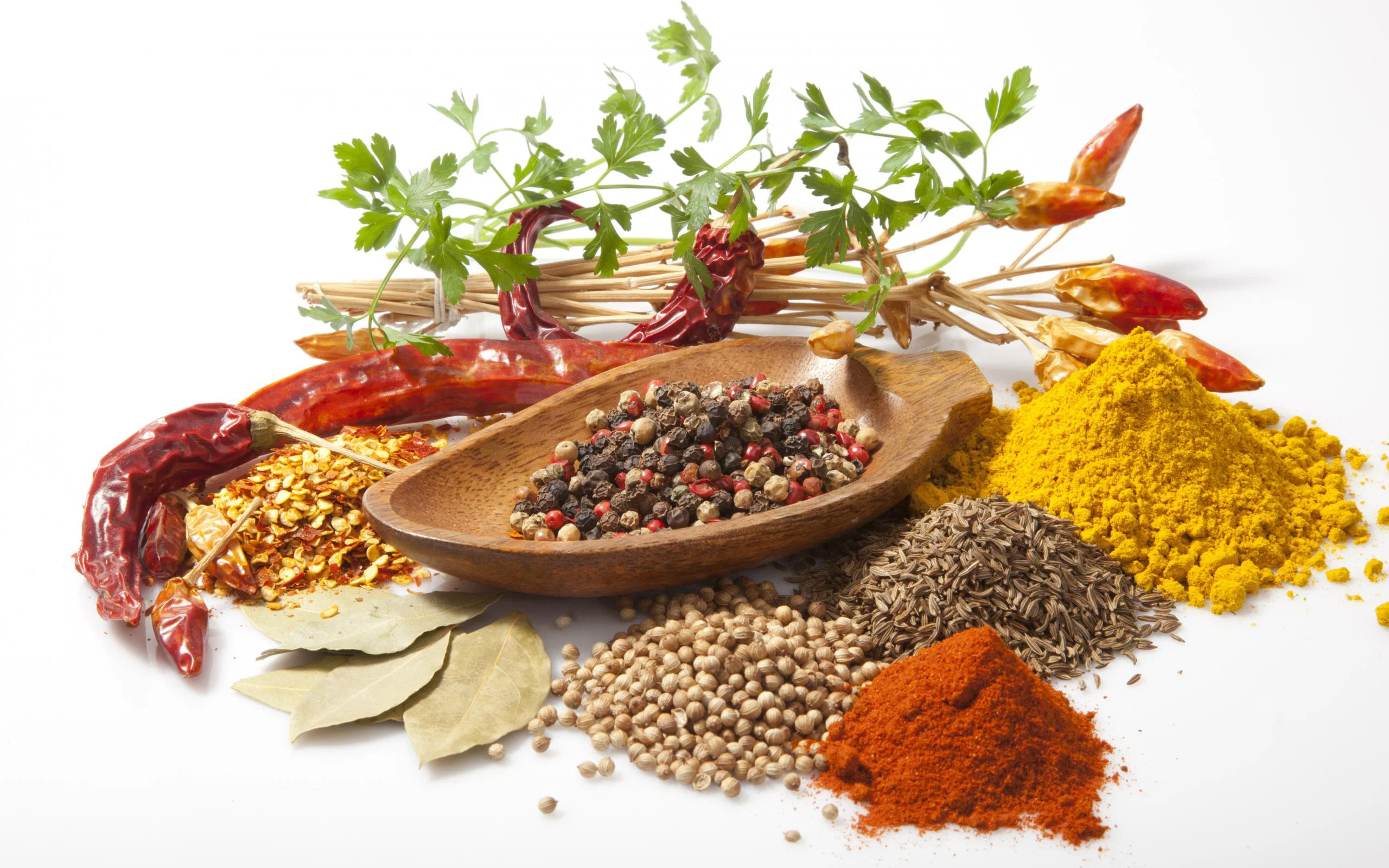
Spices & Herbs
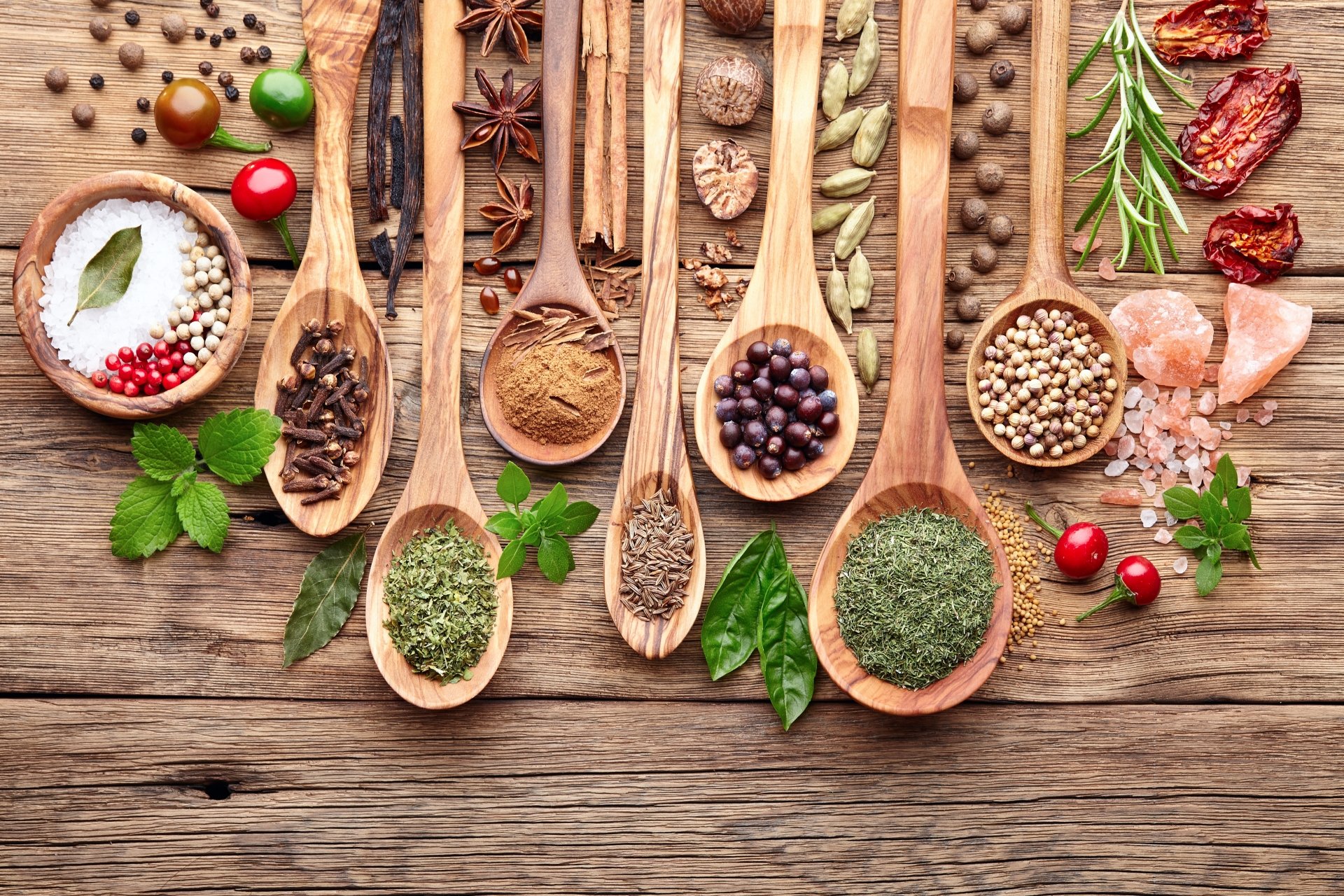
1. Definition
• Spices: Dried parts of plants such as seeds, bark, roots, fruits (e.g., pepper, turmeric, cinnamon).
• Herbs: Leaves, flowers, or soft stems (e.g., coriander leaves, basil, mint).
They are primarily used for flavouring, colouring, preservation, and medicinal purposes.
2. Composition & Chemical Characteristics
Spices and herbs contain a complex mixture of bioactive compounds:
A) Volatile Oils (Essential Oils)
• Responsible for aroma and flavour
• Contain terpenes, aldehydes, phenols
• Indicator of freshness and quality
B) Oleoresins
• Combination of volatile + non-volatile compounds
• Provide full flavour, pungency, and colour
C) Non-volatile Components
• Alkaloids (e.g., piperine in pepper)
• Capsaicin (chilli pungency)
• Polyphenols & antioxidants
D) Basic Nutritional Components
• Carbohydrates, fibre, trace proteins
• Minerals (Ca, Fe, Mg, Zn)
3. Key Quality Parameters (Laboratory Perspective)
Physical Parameters
• Appearance, colour, size
• Extraneous matter (dust, stones, insects)
Chemical Parameters
• Moisture: typically, 8–12% (critical for shelf life)
• Volatile oil content: defines potency
• Total ash & acid insoluble ash: indicates purity/adulteration.
Contaminants & Safety
• Mycotoxins (Aflatoxins)– major concern due to fungal growth
• Pesticide residues
• Heavy metals (Pb, Cd, As, Hg)
• Microbial load (TPC, yeast & mould, pathogens)
4. Processing & Handling
• Harvesting → Cleaning → Drying → Grinding → Packaging
• Proper drying is critical to avoid fungal contamination
• Grinding reduces shelf life due to loss of volatile oils
5. Storage Requirements
• Low moisture and humidity
• Cool, dark storage to preserve volatile oils
• Protection from insects and contamination
6. Adulteration Issues
Common adulterants include:
• Artificial colours
• Starch, husk, or fillers
• Exhausted (used) spices
• Foreign organic/inorganic matter
7. Regulatory & Standards (India/Global)
• FSSAI (India)
• ISO / Codex Alimentarius
• Spice Board India standards
8. Applications
• Food industry (flavouring, colouring)
• Pharmaceuticals (medicinal properties)
• Cosmetics (essential oils)
• Nutraceuticals
9. Shelf Life
• Whole spices: longer shelf life (retain oils)
• Ground spices: shorter shelf life (oxidation & volatilisation)
10. Key Risks
• Moisture → Mould growth → aflatoxin formation
• Loss of aroma due to improper storage
• Adulteration affecting quality and safety.
Conclusion:
Spices and herbs are high-value, sensitive agricultural products where quality depends on moisture control, volatile oil retention, purity, and absence of contaminants. Proper testing and handling are essential for regulatory compliance and export quality. If you want, I can convert this into.